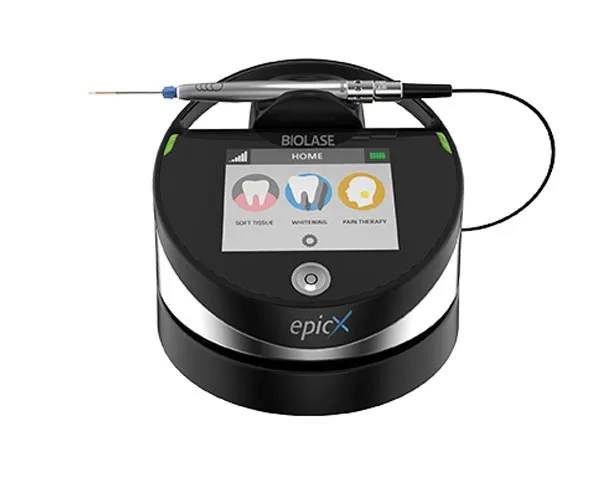
The use of soft-tissue lasers in dentistry is a highly innovative and completely safe procedure, with many applications in oral surgery, aesthetic dentistry, periodontics and endodontics.
At Tooth Experts dental clinic, we use the world’s best diode laser, made by the leading manufacturer of dental lasers, which is headquartered in the USA. This laser offers three different treatment modes and 30 clinical applications. It can be used in surgical procedures in the mouth, in cases of temporomandibular joint (TMJ) pain, and in teeth whitening.
What are the advantages and clinical applications of the Biolase Epix laser in dentistry?
- Faster healing through the tissue biostimulation protocol (Low Level Laser Therapy)
- Exceptional precision in the surgical removal of soft tissue
- Less bleeding after surgery
- Reduced pain – it can even be used without anesthesia
- Sterilization of the treatment area and a lower risk of infection
- Aesthetic smile correction treatments
- Treatment of painful mouth ulcers (aphthous ulcers) and simple cold sores (herpes labialis)
- Excision of benign tumors and removal of hypertrophic (enlarged) frenula
- Disinfection of the root canals during root canal treatment
- Faster, painless in-office teeth whitening
Quick answers
Is laser treatment in dentistry safe?
Soft-tissue laser use in dentistry is an innovative and completely safe procedure, with many applications in oral surgery, aesthetic dentistry, periodontics and endodontics.
Does laser treatment hurt?
Laser treatment means reduced pain, and it can even be used without anesthesia. It also causes less bleeding after surgery and speeds up healing.
What is the dental laser used for?
The Biolase Epix diode laser has three treatment modes and 30 clinical applications, including oral surgery, temporomandibular joint (TMJ) pain, teeth whitening, treatment of mouth ulcers and cold sores, and disinfection of root canals during root canal treatment.
Can a laser be used for teeth whitening?
Yes. With the laser, in-office teeth whitening is faster and painless.
This article is for information only and does not replace a clinical examination or your dentist’s advice.