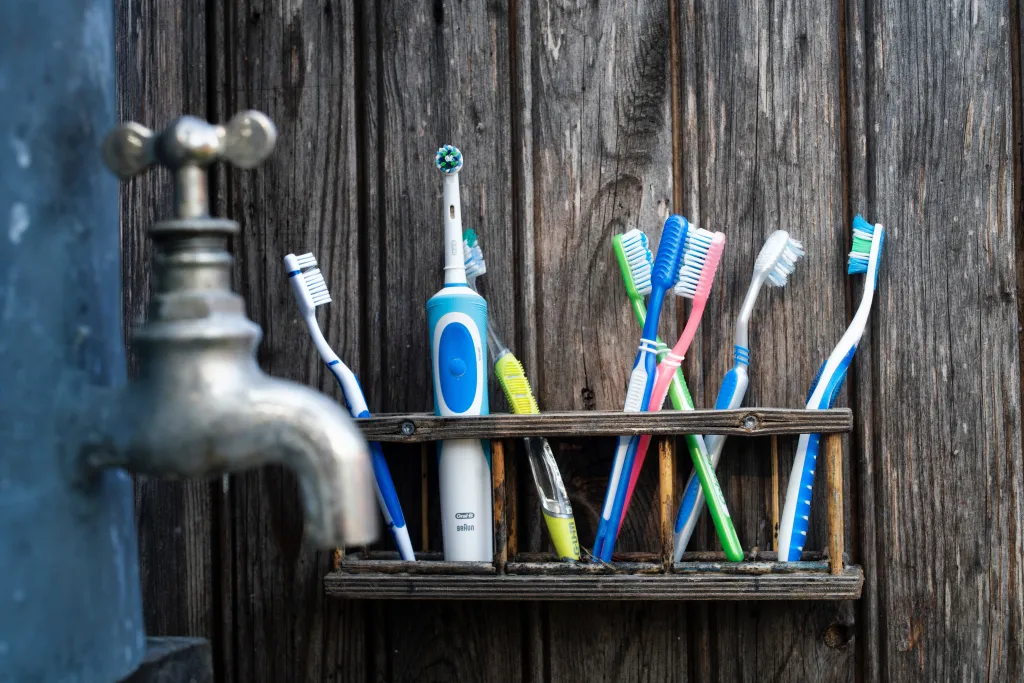
When can a child start brushing their teeth on their own? How can a parent help a child see brushing as a fun experience? How can we be sure our little ones are brushing their teeth properly? When can we give a child their first electric toothbrush? These are questions that have troubled, or at some point will trouble, many of us parents.
After all, daily dental care is a prerequisite for good oral hygiene, and the sooner children understand the importance of brushing, the less likely they are to run into problems in the future.
The good news is that today, technology lets us carry out many essential everyday habits more easily and, potentially, in a more fun way. When it comes to brushing in particular, electric toothbrushes were, and of course still are, a real innovation.
One of the common dilemmas we face when choosing a new toothbrush, whether for ourselves or for our children, is whether to go for one of the modern electric toothbrushes or a simple manual one. It is worth noting that brushing your teeth is an essential daily routine for maintaining good oral health, and choosing the right toothbrush can play an important role in how effective it is.
The electric toothbrush has become especially popular in recent years and is widely acknowledged to provide superior oral hygiene. Depending on your child’s age group, electric toothbrushes, like manual ones, fall into the following three categories. For example, from ages three to five you will need to look at the Kids category, from age six and up at Junior electric toothbrushes, and from age 13 at the Teen category. But can an electric toothbrush really be compared with a manual toothbrush and prove to deliver better results?
Essentially, what we are trying to achieve when we use a toothbrush, whether manual or electric, is the maximum removal of microbial dental plaque (known to everyone simply as plaque), in order to achieve or maintain healthy gums and teeth. Most manual or electric toothbrushes will achieve this, as long as they are used correctly.
Manual toothbrush: the classic, reliable choice for good oral hygiene
The manual toothbrush has many well-documented advantages, given that it has been in use for many years.
1) Cost: Manual toothbrushes are very affordable and can be found almost everywhere (pharmacies, grocery stores, etc.). Unfortunately, some people still consider electric toothbrushes quite expensive, so it is very reassuring to know that you can get good results with manual ones too.
2) Easy to take when traveling. They are very small, so they take up almost no space in your suitcase. You can even keep one in your bag every day.
3) Many designs and colors. Although electric toothbrushes come in some special colors, they cannot compete with the variety of colors, sizes and brush heads that manual toothbrushes offer.
Their main disadvantage is that they require particular effort and care to achieve the desired result. Unfortunately, barely one in ten patients brushes correctly and effectively with a manual toothbrush. In addition, elderly patients with arthritis and people with special needs are undoubtedly two groups for whom an electric toothbrush should be recommended without hesitation. Finally, according to the ADA (American Dental Association), patients with reduced mobility in their shoulders and hands can benefit from how easy an electric toothbrush is to use, as well as from its larger handle.
Why choose an electric toothbrush?
Today, electric toothbrushes come in a range of designs and colors and are equipped with a wide variety of technical features. They include a timer, a pressure indicator (a sensor that tells us when we are pressing too hard while brushing), brushing programs for every need, and apps that connect to smartphones and give us statistics on our monthly oral hygiene.
Thanks to its high number of rotations and the special 3D or 2D motion it gives its replaceable brush head, an electric toothbrush delivers superior oral hygiene with no effort at all. Even the most affordable electric toothbrush removes plaque better, as scientific studies have shown that an electric toothbrush removes at least 50% more plaque than a manual one.
The main advantages of an electric toothbrush are:
1) Ease of use and comfort. With an electric toothbrush, all we have to do is hold it at a 45-degree angle toward the gumline, and it does all the work. In addition, compared with a classic manual toothbrush, an electric toothbrush cleans the teeth one or two at a time, since it has a small head. This means it is better at removing tartar, plaque and food debris. With a manual toothbrush, someone who does not follow a proper brushing technique makes large movements while brushing, which is wrong, and brushes large groups of teeth at once instead of one or two teeth at a time.
2) Optimal results with minimal effort. Studies have shown that electric toothbrushes remove at least 50% more plaque and, with much less effort and in less time, provide a high level of oral hygiene. Because they have a smaller head, they are the recommended choice for people who have a strong gag reflex and find it hard to brush their back teeth.
3) An “interactive game” for kids. If a child doesn’t brush their teeth simply because they don’t know how or find it boring, an electric toothbrush decorated with their favorite hero is sure to be an exciting challenge! It takes less effort and is quicker and more effective, as the child brushes for longer and removes more germs from the tooth surfaces.
4) Pressure indicator. Most electric toothbrush models have a pressure indicator, which helps us avoid injuring our teeth and gums.
The main disadvantages of the electric toothbrush are that we must remember to charge it about once a week, and that its cost is still high for some consumers.
Numerous studies have been carried out without producing a clear answer that is unanimously accepted by the dental community. Although many studies have shown that using an electric toothbrush removed a greater proportion of dental plaque from the teeth, this is probably not due solely to the cleaning ability of electric or rechargeable toothbrushes, but to other factors related to how they are used.
Importantly, many studies have found that people who brushed correctly achieved the same result with either a manual or an electric toothbrush. Since most users do not brush in the most correct way, or for as long as they should, the comparative statistical advantage of electric toothbrushes is believed to come from their ease of use, which helps this group of users.
So many parents will wonder whether they should get their children an electric toothbrush. First, they should consider this: yes, electric toothbrushes improve oral hygiene. But they cannot work miracles on their own, nor are they the only option compared with classic manual toothbrushes. Perhaps the best approach is for a child to learn to brush properly with a regular toothbrush and later switch to an electric one if it suits them better. Of course, for children with motor problems in their hands, or who have significant difficulty handling a regular toothbrush, children’s electric toothbrushes are the right choice.
Remember: the more your child understands the value of brushing and comes to love it, the more likely they are to take proper care of their oral hygiene in the future. By linking brushing with their favorite heroes and fun activities, one thing is certain: they will no longer see it as a daily “chore” or just another “must.”
Quick answers
Is an electric toothbrush better than a manual one?
Studies have shown that electric toothbrushes remove more plaque, but people who brush correctly achieve the same result with either type. Their advantage seems to come mainly from their ease of use, since most people do not brush correctly or for long enough.
Which electric toothbrush is right for my child's age?
Toothbrushes come in three categories: Kids for ages three to five, Junior for ages six and up, and Teen from age 13.
Should my child start with a manual or an electric toothbrush?
Perhaps the best approach is for a child to first learn to brush properly with a regular toothbrush and later switch to an electric one if it suits them better. For children with motor problems in their hands or significant difficulty handling a regular toothbrush, a children's electric toothbrush is the right choice.
Who benefits most from an electric toothbrush?
Elderly people with arthritis, people with special needs and those with reduced mobility in their shoulders and hands benefit from its ease of use and larger handle. Its smaller head also makes it the recommended choice for people with a strong gag reflex.
This article is for information only and does not replace a clinical examination or your dentist’s advice.