
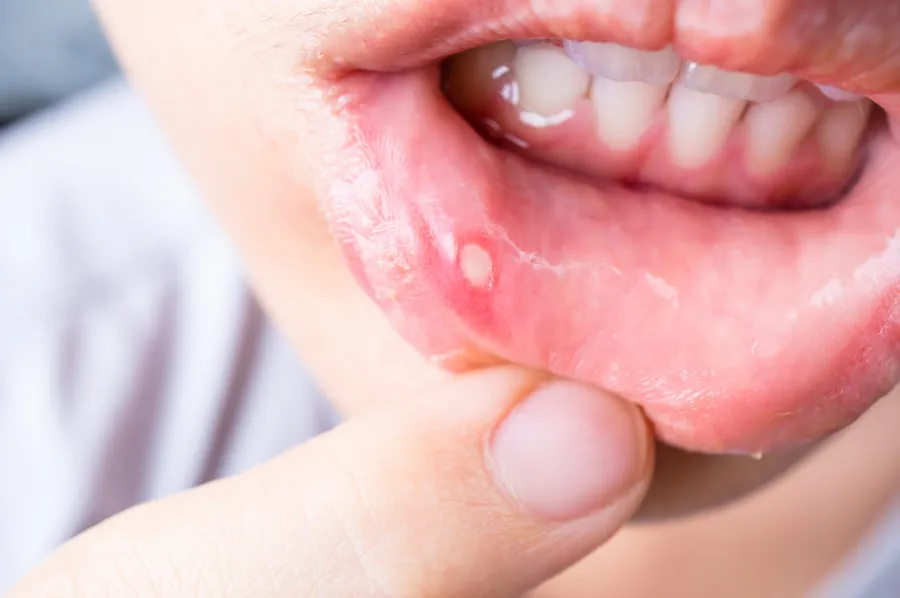
Mouth ulcers (aphthous ulcers) are lesions of the mouth that are very common in childhood but also in adult life. They are small, shallow, round or oval sores in the mouth that are painful and often recur. These sores are covered by a white membrane, while the surrounding mucosa is red. At first, an ulcer appears as a painful red spot; it then swells and bursts, leaving the ulcer behind. Mouth ulcers appear inside the mouth, most often on the lips, on the top, underside or sides of the tongue and on the cheeks. Usually more than one ulcer appears at a time. They are small, less than one centimeter in diameter, and only 15% of them are larger.
Why do they appear?
Mouth ulcers have been known since ancient times; the first reference to them was made by Hippocrates. To this day, however, their cause remains unknown. There are triggering factors that bring on mouth ulcers, the main ones being:
- an allergy to a food (e.g. cheese, chocolate, gluten, strawberries, tomatoes, various food preservatives)
- a recent illness (high fever)
- an allergy to a medication
- stress
- vitamin deficiency (mainly of the B complex)
- hormonal disorders
- blood disorders (iron deficiency)
- diseases of the gastrointestinal system
- heredity: if a parent has mouth ulcers, their child has a 50% chance of developing the same problem.
Mouth ulcers are usually harmless and easy to manage. They heal on their own and go away just as they came. Mouth ulcers are not contagious. The small ones, which are the most common, usually clear up on their own within 1–2 weeks. Larger ulcers, more than one centimeter in diameter, usually last longer than the small ones.
What is the treatment?
There is no medicine that cures aphthous stomatitis. Topical products are used to relieve the pain. Pharmacies carry products in the form of a solution, gel or spray that are applied directly to the ulcers and reduce the pain. Foods that irritate the ulcers should be avoided, such as sour and salty foods and all spices. Oral antiseptics or topical antibiotics not only do not help but may cause further irritation. Also, during the first days, when the pain is intense, rinsing with lukewarm chamomile is very soothing. In rarer cases of multiple or large ulcers that recur frequently, systemic treatment may be needed, usually with corticosteroids; however, any medication should be taken only on the recommendation of your dentist or pediatrician. In addition, any sore in the mouth that does not heal must be examined by a doctor.
Laser treatment
In addition to the conventional ways of treating mouth ulcers, at our practice we also treat them with a laser. Laser treatment causes no pain. The laser tip does not touch the lesion; it stays several millimeters away from it. The laser beam vaporizes and removes the painful part of the lesion, while also providing initial healing. The pain disappears immediately, and the patient is advised to avoid sour foods for a day or two so as not to feel the slightest discomfort.
Quick answers
Are mouth ulcers contagious?
No, mouth ulcers are not contagious. They are usually harmless and heal on their own.
How long do mouth ulcers last?
Small ulcers, which are the most common, usually clear up on their own within 1–2 weeks. Larger ones, more than one centimeter in diameter, usually last longer.
What causes mouth ulcers?
Their cause remains unknown, but there are triggering factors such as a food or medication allergy, a recent illness with high fever, stress, a lack of B vitamins or iron, hormonal disorders, gastrointestinal diseases and heredity.
How can mouth ulcer pain be relieved?
Pharmacy products in the form of a solution, gel or spray can be applied to the ulcers to reduce the pain, and lukewarm chamomile rinses are very soothing in the first days. Avoid sour and salty foods and spices; at our practice, mouth ulcers can also be treated with a laser.
This article is for information only and does not replace a clinical examination or your dentist’s advice.